

Where these tables apply
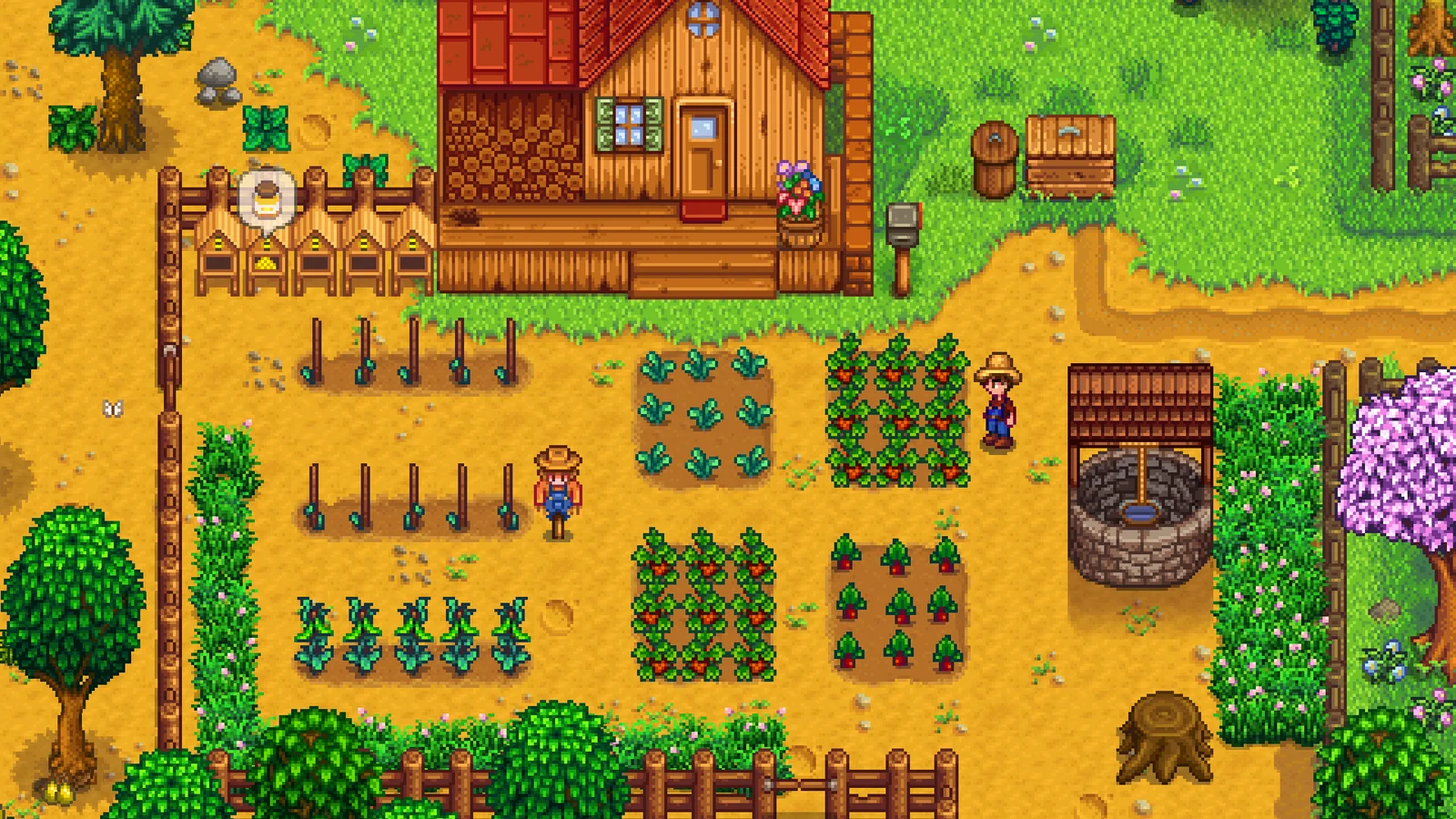
Pelican Town is the map identified internally as Town, built from Maps/Town. Its listed fishing areas are the Fountain and the River, which distinguishes water-based fishing spots from ground-level artifact spots. The forage and dig tables described here belong to this location; a dig spot or seasonal forage item encountered somewhere else is a separate lookup. The source establishes the location's identity and its fishing areas. It does not state how artifact spots spawn, how often they appear, or what tool handling is required, so these tables should be read as drop definitions rather than spawn-rate guidance.
What the source says about the dig roll
When an artifact spot at Pelican Town is dug up, the drop table is rolled in order. Entries can lack a matching item name, and in that case the drop is a query the game resolves itself rather than a fixed named item. That is the full extent of what the supplied facts establish about resolution. They do not state how each listed percentage combines with the others, whether the sequence stops after a match, or how self-resolved queries convert into items. Those points should not be inferred here; the practical takeaway is only that the table is consulted in order and that some results depend on the game's own resolution.
The five dig-spot entries
Pelican Town's dig-spot table contains five possible drops. Two carry explicit figures in the supplied data: Copper Ore at 20% with a stack size of 1–3, and Stone at 25% with a stack size of 1–3. The remaining three entries are not itemised in the facts, and at least one of the table's entries involves the self-resolving query described above. Because only two entries include percentages and stack ranges, any figure attributed to the other three would be unsupported. Keep the confirmed reading narrow: Copper Ore and Stone appear in the table at those chances with those stack ranges, alongside three further entries whose details are not given.
Seasonal forage across the year
Pelican Town's forage table lists six entries. The confirmed seasonal figures are: Daffodil at 90% in Spring; Blackberry at 60% in Fall; and, in Winter, Crocus at 70%, Crystal Fruit at 10% and Holly at 50%. That gives the town a strong Spring showing for Daffodil, a single Fall entry for Blackberry, and a Winter slate carrying three separate items at widely different chances. No confirmed entry is given for Summer in the supplied facts, and the six-entry total means one forage entry is not itemised. Its season, item name and chance cannot be stated here.
Forage entries versus dig entries
The two tables describe different things and should be read separately. Forage entries pair an item with a season and a percentage, describing what the location lists seasonally. Dig entries pair a drop with a percentage and, where given, a stack size, describing what an artifact spot yields when dug; Copper Ore and Stone each carry a 1–3 stack range. When checking a specific item, first decide whether it is a seasonal forage listing or a dig-table entry, then read only the matching table. The source does not say how the two tables interact, so the figures should not be combined into a single probability for one item.
What the data leaves open
Several gaps remain. The dig table lists five entries, but only Copper Ore and Stone are given with percentages and stack sizes. The forage table lists six entries, but only Daffodil, Blackberry, Crocus, Crystal Fruit and Holly are specified. The unnamed dig queries resolve to items the game decides, and the source does not say which. Nothing here establishes spawn frequency, luck effects or seasonality of artifact spots. Use these tables for the numbers they actually contain; for anything beyond drop definitions, consult the linked location pages.
Pelican Town Forage and Artifact-Spot Drop Tables
Connected Reading
Direct connections
- Related reading
Pelican Town Forage and Artifact-Spot Drop Tables links to Cindersap Forest Forage: Spring and Winter Items and Artifact Spots as related reading.
Cindersap Forest (location id Forest, map file Maps/Forest) records Wild Horseradish and Dandelion as Spring forage at 90% each; Crocus and Crystal Fruit as Winter forage at 90% each with Holly at 50%; and Stone as an artifact-spot dig result at 25% in stacks of 1–3.
 LocationsCindersap ForestRelated reading
Pelican Town Forage and Artifact-Spot Drop Tables links to Cindersap Forest as related reading.
- LocationsPelican TownRelated reading
Pelican Town Forage and Artifact-Spot Drop Tables links to Pelican Town as related reading.
Questions and Answers
What is the chance of Copper Ore and Stone from a Pelican Town artifact spot?
The dig-spot table gives Copper Ore at 20% with a 1–3 stack and Stone at 25% with a 1–3 stack. Both are entries in a table that the source says is rolled in order when an artifact spot is dug up. The other three entries in the five-drop table are not given figures in the available data, so no chance or stack size can be stated for them.
Which forage items appear in Pelican Town by season?
The confirmed entries are Daffodil at 90% in Spring, Blackberry at 60% in Fall, and in Winter Crocus at 70%, Crystal Fruit at 10% and Holly at 50%. That accounts for five of the six entries in the location's forage table. The sixth entry is not itemised in the supplied data, so its season, item and chance cannot be listed.
Why do some Pelican Town dig results not name an item?
When an artifact spot at Pelican Town is dug, the drop table rolls in order, and an entry with no matching item name is a query the game resolves itself. That means the outcome is determined by the game rather than written into the table as a named drop. The source does not list what those self-resolved results are, so they cannot be specified here.